


Work Life Balance and the Portfolio FD

For a great many experienced finance directors, the appeal of a portfolio career comes down to one thing: control over their own time. A portfolio FD is a part-time finance director who works with several clients at once, and the nature of that arrangement is far more flexible than a traditional full-time FD role — which, as anyone who has done it knows, is rarely nine-to-five once month-ends, year-ends and board deadlines are in the calendar. For a finance leader who wants more flexibility than a conventional role allows, the portfolio route is well worth understanding. This article sets out how it works, what it pays, the trade-offs involved, and how to build a portfolio that delivers the balance you are looking for.
What a portfolio FD actually is
A portfolio finance director provides part-time finance leadership to multiple businesses simultaneously — typically SMEs that need genuine FD-level expertise but are not yet at the scale to justify, or afford, a full-time appointment. Rather than one employer commanding all of your working week, you hold a portfolio of clients, each taking an agreed share of your time: perhaps one or two days a week each, across two or three clients. The work itself is usually no different from a conventional FD role — management accounts, year-ends, cash flow, funding, acquisitions, board reporting — it is the structure around it that changes. The model is growing steadily in popularity, and roles come along more frequently than they once did as more SMEs recognise the value of fractional finance leadership.
The defining feature is flexibility over how, when and for whom you work. Because you choose which clients to take on and can shape the time commitments around your own availability, the portfolio FD role offers a level of control over your working life that a single full-time position simply cannot. That is the heart of its appeal, and the reason so many senior finance professionals move to it at a certain stage of their careers.
How the flexibility translates into work-life balance
The practical benefit is that you can build your working week around your life rather than the other way around. If you have childcare responsibilities, you might arrange a regular pattern — working, say, 10 til 3 on set days, or two to three days a week and keeping the rest clear. If your priorities are seasonal, you can work five days a week through the winter and ease back in the summer to make the most of the weather and your other interests. One member of our own team spends long weekends through the summer travelling to European cities, working Tuesday to Thursday so she can see as much of Europe as she likes while keeping her client commitments fully met. Another approach entirely is to concentrate work into part of the year and take extended time off in another.
The point is that the combinations are genuinely varied, and you design them. This is quite different from negotiating flexibility as a favour within a full-time role, where the employer’s needs always come first in practice. As a portfolio FD, the flexibility is structural — it is built into how the arrangement works, not granted as an exception — which is precisely why it delivers a quality of work-life balance that is hard to achieve any other way in a senior finance career.

What a portfolio FD earns
The flexibility does not come at the cost of the money. A typical day rate for a portfolio FD is in the region of £450–650 per day depending on location and experience, with London and the more specialist or complex mandates towards the top of that range. Because you are charging a professional day rate across several clients rather than drawing a single salary, the earning potential is genuinely there — a well-constructed portfolio of three or four days a week at those rates compares very favourably with a full-time FD salary, while leaving you time that a full-time role would not. The economics are part of why the model appeals to experienced FDs who value both their time and their income.
The trade-offs, honestly
It would be misleading to present the portfolio route as pure upside, so it is worth being candid about the challenges. The main one is that the work is niche and therefore not always easy to come by. You should expect to spend perhaps three months or so prospecting for work before a suitable role comes along, particularly when you are starting out and building your reputation and network in the space. That lead time is real, and it is worth planning for financially before you make the move.
There is also the reality of business development as an ongoing part of the role. Even once established, a portfolio FD spends time finding and winning work — keeping a day a week for job applications, meetings with audit firms, banks and private equity houses, and maintaining the relationships that generate referrals. Many portfolio FDs, myself included, treat one day a week as a combination of personal time and business development, which works well but does need to be built into the rhythm. And portfolio work usually means working with SME clients, which is not for everyone: it calls for a willingness to be flexible and roll up your sleeves rather than sit above the detail. For most people who make the move, though, that hands-on involvement is a positive — your skills often add more visible value in an SME, and that tends to bring greater job satisfaction, not less.
Portfolio, full-time, interim: how they compare
It helps to place the portfolio route alongside the alternatives, because the right choice depends on what you actually want from your working life. A full-time FD role offers stability, a single focus, and no responsibility for finding your own work — but the flexibility is limited, the hours are frequently longer than the contract implies, and your time belongs to one employer. An interim FD role offers variety and often strong day rates, but it typically means full-time commitment to one client for a defined period, so while the assignments change, the day-to-day pattern during each one looks much like a permanent role, and there are gaps between contracts to manage.
The portfolio route sits between the two and takes the best of each for the person who values balance above all. Like interim work it offers variety, professional day rates and independence; unlike interim work, it lets you spread your time across several clients at once, so no single one dominates your week and you keep genuine control over your schedule. The trade-off is that you carry the ongoing business-development responsibility and the income is less predictable than a salary. For a finance leader whose priority is control over their time — and who has the experience and network to sustain a portfolio — it is often the most rewarding of the three. For someone who prizes predictability and a single focus, full-time or interim will suit better. There is no universally right answer; there is only the right answer for what you want at this stage of your career.
How to build a portfolio
Building a successful portfolio is partly about the work and partly about the network. Because these roles are less common than conventional FD positions, the most reliable route in is to join a network that specialises in them. At FD Capital we are finance directors and CFOs ourselves and specialise in exactly this area, which means we understand both sides — the finance leaders looking for portfolio work and the SMEs that need it — and can make matches that work for both. Being part of a specialist network shortens the prospecting time considerably and gives you access to roles that are never advertised, because they are filled from within the network before they ever reach a job board.
It is also worth being clear about the breadth of finance leadership that sits under the portfolio umbrella, because the flexible model applies across several disciplines. FD Capital’s portfolio finance director work spans part-time and fractional roles, private-equity-experienced FDs, interim and turnaround specialists, and sector-specialist finance leaders. Whatever your particular expertise, the portfolio approach can usually be built around it — and identifying where your experience is most valuable is the first step to constructing a portfolio that both pays well and delivers the balance you want.
Making the move to portfolio work
For an experienced FD considering the switch, a little planning makes the transition far smoother. The first practical point is financial: because there is usually a lead time of a few months before the first client is secured, it is sensible to have a buffer in place so that the prospecting period is comfortable rather than pressured. Moving from a salary to day-rate income is a change of rhythm as much as a change of amount, and giving yourself room to establish the first one or two clients without financial strain sets the portfolio up well.
The second is to think about how you present what you offer. SMEs engaging a portfolio FD are buying senior judgement they cannot otherwise access, so being clear about the specific value you bring — whether that is fundraising, turnaround, systems and controls, PE experience, or sector depth — helps clients understand quickly why they need you. The third is network: the single biggest determinant of how quickly a portfolio fills is the strength of the relationships and referral sources you can draw on, which is why joining a specialist network early is so valuable. And the fourth is mindset — portfolio work rewards those who are comfortable being hands-on, self-directed and flexible across several client cultures at once. Get those four right and the portfolio tends to build steadily; the first client is the hardest, and each subsequent one is easier as your reputation in the space grows.
Is a portfolio FD role right for you?
The honest answer is that it suits a particular kind of finance leader at a particular stage. If you have the experience to add real value quickly, the appetite to work across several businesses at once, the resilience to handle the business-development side, and a genuine desire for more control over your time, the portfolio route can be one of the most rewarding ways to work in senior finance — professionally and personally. If you would rather have a single employer, a predictable structure and no responsibility for finding your own work, a conventional full-time or interim role will suit you better.
For those it does suit, the combination is hard to beat: senior, varied, well-paid work, done on terms you largely set yourself. It is not effortless — the prospecting is real and the SME environment demands flexibility — but for the right person it delivers a quality of working life that a traditional FD role rarely can. If a better balance between your career and the rest of your life is what you are after, and you have the experience to make it work, it is well worth serious consideration.
Call 020 3287 9501 or email recruitment@fdcapital.co.uk if you are an experienced FD or CFO interested in portfolio work, or an SME looking for a portfolio finance director.
FD Capital — Portfolio & Part-Time FD Recruitment
Fellow of the ICAEW | Connecting experienced finance leaders with portfolio, part-time and fractional FD roles across the UK since 2018. 4,600+ network. 160+ placements. Shortlists in 3–7 working days.
Looking to hire? FD Capital’s finance director recruitment service
FD Capital provides finance director recruitment across the UK. Explore our finance director recruitment service or call 020 3287 9501 to discuss a mandate.
Related reading and services
Part-time FDs working across multiple businesses.
Practical routes into portfolio finance work.
Part-time finance director appointments.
Permanent and interim FD appointments.
About the author
Adrian Lawrence FCA is the founder and Managing Director of FD Capital. A Fellow of the Institute of Chartered Accountants in England and Wales and a former listed-company Finance Director, he leads every portfolio and part-time FD mandate FD Capital accepts personally. Verify his ICAEW membership.
Call 020 3287 9501 or email recruitment@fdcapital.co.uk.
This article is general information and does not constitute professional advice.
Related posts:
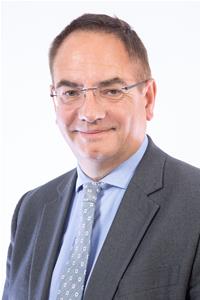
Adrian Lawrence FCA is the founder of FD Capital and a Fellow of the Institute of Chartered Accountants in England and Wales (ICAEW). He holds a BSc from Queen Mary College, University of London, and has over 25 years of experience as a Chartered Accountant and finance leader working with private, PE-backed and owner-managed businesses across the UK. He founded FD Capital to connect growing businesses with the Finance Directors and CFOs they need to scale — and personally interviews candidates for senior finance appointments.



 Accredited Member of GBC
 Accredited Member of LWF
 Carbon Offset via TreeNation