


Tesla Model 3 and P11d benefit
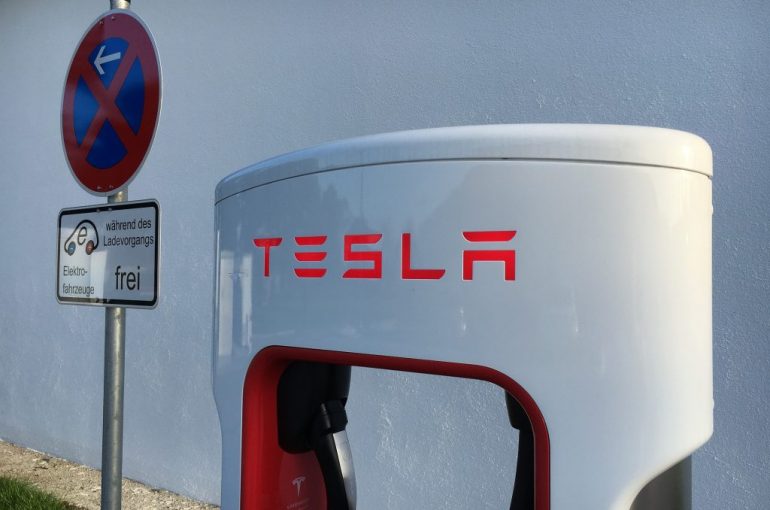
I first wrote about the Tesla Model 3 and its benefit in kind treatment back in 2019, when the car had only just arrived in the UK and the government had announced a headline-grabbing company-car tax rate for electric vehicles. Years on, I still drive a lot of miles as a portfolio FD, the charging network has been transformed, and — importantly for anyone reading the original version of this article — the tax rules have moved on. So this is an updated look at where the Model 3 and company-car benefit in kind actually stand in 2026.
The appeal hasn’t changed. A fully electric company car remains one of the few genuinely tax-efficient ways for a business owner or director to put a personal vehicle through the business. What has changed is the specific numbers, and it matters that you work from the current ones rather than the 2% figure that did the rounds when the Model 3 launched.
How the benefit in kind is calculated
The taxable benefit on a company car is the car’s P11D value — broadly the list price including VAT, delivery and options, but excluding first-registration fee and road tax — multiplied by an appropriate percentage set by HMRC according to the car’s CO2 emissions and fuel type. You then pay income tax on that benefit at your marginal rate (20%, 40% or 45%). For a zero-emission car the appropriate percentage is very low, which is what makes an EV so attractive compared with a petrol or diesel equivalent sitting in the 25%-37% bands.
The EV benefit in kind rate in 2026 — no longer 2%
This is the key update. When the Model 3 arrived, the electric-car benefit in kind rate was set at just 2%, and a lot of early coverage (including my own) talked as though that would last indefinitely. It hasn’t. The rate has been on a legislated upward path since April 2025:
- 2025/26: 3% — up from the old 2%
- 2026/27: 4% — the current tax year
- 2027/28: 5%
- and continuing to climb by roughly a point or two a year thereafter, reaching around 9% by the end of the decade under the rates confirmed in the 2025 Autumn Budget
So the picture in 2026 is a 4% appropriate percentage rather than 2%. To put that in cash terms: a Model 3 with a P11D value of around £48,000 at 4% gives a taxable benefit of roughly £1,920. A 20% taxpayer pays about £384 a year on that; a 40% taxpayer about £768 — call it £30-£65 a month. That is still remarkably cheap for the use of a car of this calibre, and even at the 9% cap later this decade an EV will attract well under a quarter of the benefit in kind of a comparable petrol or diesel car. The direction of travel is up, but the gap in the EV’s favour remains compelling.
Why it still stacks up for business owners
The reason an electric company car appeals to the tax-conscious among us — and I include accountants firmly in that group — is that the low benefit in kind sits alongside several other genuine advantages that remain true in 2026:
- Capital allowances — a new, unused fully electric car qualifies for a 100% first-year allowance, so the business can write off the full cost against profits in year one (subject to the current qualifying deadlines), rather than the slower writing-down pool that applies to higher-emission cars
- No fuel benefit — electricity is not classed as a road fuel for these purposes, so there is no separate car-fuel benefit charge on the electricity used, unlike the fuel benefit that catches petrol and diesel company cars
- Running costs through the business — insurance, servicing and charging costs can be met by the business in the normal way
Taken together, that is a legitimate and well-signposted way to shift what would otherwise be personal motoring costs into the business, gain tax relief on the vehicle, and — the part that genuinely appealed to me — help move the country towards its carbon commitments at the same time. As always, the exact position depends on your own circumstances and it is worth checking the current-year figures and deadlines with your accountant before committing; the value of a strong in-house tax capability is exactly this kind of detail.
Driving a lot of miles
The thing that originally put me off an electric car was mileage — I cover a lot of ground each week visiting clients. What changed my mind was range and infrastructure. The Model 3’s real-world range now comfortably clears 300 miles, and motorway services increasingly have rapid charging in place. Few journeys are genuinely out of range: on anything over a couple of hours I would normally take a 20-30 minute break anyway, and that is enough to add a very useful chunk of range. The maths that felt marginal in 2019 is straightforward now.
I have also long wanted a home battery and solar panels alongside the car, so that some of the charging can come from cheaper overnight or self-generated electricity rather than peak-rate power. There is something quite satisfying, as an accountant, about a set-up where the tax incentives and the running-cost savings point in the same direction — it gives you the nudge to do the thing you were half-minded to do anyway.
Where the wider market is heading
Encouraging corporate fleets to switch to electric is one of the ways we can save our clients money on their tax bills and do our bit on emissions at the same time, and increasingly the electricity itself is coming from renewable sources — offshore wind in particular — which reduces the national reliance on fossil fuels. Coal-fired generation has largely come off the system; the station that used to sit near me at Ironbridge in Telford is long closed. Step by step the transition is happening, and the tax system has been used deliberately to accelerate it. My expectation remains that the incentives will keep nudging drivers towards electric, even as the headline benefit in kind rate ticks up from those early rock-bottom levels.
Electric versus plug-in hybrid: the benefit in kind gap
A question I am often asked is whether a plug-in hybrid gets you to a similar place. In 2026 the answer is clearly no — the gap has widened. A fully electric car like the Model 3 sits at the 4% appropriate percentage regardless of range. Plug-in hybrids are still assessed on their electric-only range, and in 2026/27 most fall somewhere in the 8%-16% bands because relatively few offer the very long electric range needed for the lowest figure. That is already two to four times the benefit in kind of a pure EV.
The direction of travel makes the point sharper still. From 2028/29 the range-based system for plug-in hybrids is being removed and they will be taxed at a flat rate well above the EV figure, while the electric-car rate continues its slow, signposted climb. If the objective is to minimise the benefit in kind charge on a company car, a pure electric vehicle is now some way ahead of the hybrid alternative, and the policy design is deliberately pulling hybrid and combustion rates closer together while keeping the EV incentive intact.
Salary sacrifice and the P11D value trap
Two practical points worth flagging for anyone acting on this. First, salary sacrifice arrangements for electric cars remain highly efficient precisely because the benefit in kind is charged on the low appropriate percentage rather than on the salary given up — which is why so many employers have rolled out EV salary-sacrifice schemes. For a director of an owner-managed business, the same low benefit in kind logic applies whether the car is provided directly or through a formal scheme.
Second, the P11D value is the manufacturer’s list price, not what you paid. This catches people out. If you negotiate a discount but the list price is higher, HMRC bases the benefit on the list price, so it is worth confirming the P11D figure with the dealer before you commit rather than assuming your invoice price is the number that matters. The benefit in kind is modest either way at 4%, but you want to be working from the correct base.
None of this is a substitute for advice on your own situation — the interaction of benefit in kind, capital allowances, VAT recovery and the qualifying deadlines is exactly the sort of thing where a capable finance function earns its keep — but the headline remains that in 2026 an electric company car is still one of the most tax-efficient options available to a business owner, even after the move off the original 2% rate.
About the author
Adrian Lawrence FCA is the founder of FD Capital and a Fellow of the Institute of Chartered Accountants in England and Wales (ICAEW). He holds a BSc from Queen Mary College, University of London, and has over 25 years of experience as a Chartered Accountant and finance leader working with private, PE-backed and owner-managed businesses across the UK. He founded FD Capital to connect growing businesses with the Finance Directors and CFOs they need to scale, and personally leads senior finance appointments across the UK.
Related reading
In-house tax leadership for growing and owner-managed businesses.
Part-time and portfolio FDs for businesses that need senior finance without a full-time hire.
How to obtain your tax summary from HMRC.
part-time, interim and full-time finance leadership
Our head office is on Great Portland Street in London, with an office in Shropshire covering the West Midlands. If you are looking for an FD or CFO for your business, reach out via our contact page, use the chat feature, or call 020 3287 9501. Speak to us FD Capital is a network of Finance Directors and CFOs
Call 020 3287 9501 or email recruitment@fdcapital.co.uk.

Adrian Lawrence FCA is the founder of FD Capital and a Fellow of the Institute of Chartered Accountants in England and Wales (ICAEW). He holds a BSc from Queen Mary College, University of London, and has over 25 years of experience as a Chartered Accountant and finance leader working with private, PE-backed and owner-managed businesses across the UK. He founded FD Capital to connect growing businesses with the Finance Directors and CFOs they need to scale — and personally interviews candidates for senior finance appointments.



 Accredited Member of GBC
 Accredited Member of LWF
 Carbon Offset via TreeNation