


The ‘Zombie Business’ Trap: Identifying When to Close Shop to Avoid Financial Drain

A zombie business is one that’s technically still operating but can’t generate enough profit to properly service its debts — kept alive by refinancing, owner cash injections or investor patience rather than by the underlying economics working. It isn’t failing outright, but it isn’t viable either, and the longer that ambiguous state continues, the more it costs everyone involved.
The term became widely used to describe Japanese companies kept afloat by lenient bank lending through the 1990s “Lost Decade,” and the same pattern shows up in any period of cheap credit: businesses that would otherwise have failed or restructured are able to survive far longer than their underlying economics justify, tying up capital and management attention that would be better redirected.
What Makes a Business a Zombie
The diagnostic signs cluster together fairly consistently: persistent negative cash flow that requires ongoing external financing to cover; revenue that only just covers interest payments with no capacity to reduce the underlying debt; stagnant or declining sales with no credible growth plan; and a reliance on refinancing or owner injections that has become routine rather than exceptional. Individually, any one of these can be a temporary rough patch. Together, and persisting for several quarters or more, they describe a business that has stopped being a going concern in any meaningful sense, even though it’s still trading.
Why Owners Struggle to See It
The financial signs are usually visible well before an owner acts on them, and the reasons are consistently emotional rather than analytical. The fear of failure — the sense that closing a business is a personal failure rather than a rational business decision — is powerful and well documented. So is identity attachment: for many founders the business isn’t just an income source, it’s years of personal investment, and closing it can feel like losing part of themselves. Optimism bias compounds both — the belief that the next quarter, the next contract, the next round will turn things around, even against mounting evidence otherwise. And a genuine sense of responsibility to employees and customers can keep an owner propping up a business well past the point where doing so serves anyone’s interests, including theirs.
None of this reflects poor judgement in general — it reflects the specific difficulty of being simultaneously the person emotionally invested in an outcome and the person meant to assess it objectively. That combination is genuinely hard to do well, for anyone.
The Cost of Prolonging the Inevitable
Keeping a zombie business running has real, compounding costs: the direct financial drain of continuing to fund a loss-making operation, often from personal savings or additional debt; the opportunity cost of time and capital that could be redirected to something viable; the strain on employees facing ongoing uncertainty rather than a clean resolution; and the toll on the owner’s own wellbeing, which tends to further impair the judgement needed to make a clear-eyed decision. The longer the ambiguity continues, the worse the eventual outcome for almost everyone involved tends to be.
Lessons From Businesses That Waited Too Long
A handful of well-documented corporate failures illustrate the same pattern at scale. Blockbuster had every opportunity to move into streaming ahead of Netflix and didn’t, betting on its retail model long after the shift in consumer behaviour was visible. Toys “R” Us carried heavy leveraged-buyout debt that left no capital available to invest in e-commerce, and continued trading under that burden for years before the debt finally caught up with it. Kodak invented the digital camera and shelved it rather than risk cannibalising film sales — a decision made explicitly to protect a business that digital photography was going to make obsolete regardless. Sears and Borders followed similar arcs: known, visible structural threats (e-commerce, digital retail) met with underinvestment and delay rather than a clear decision to adapt or exit on better terms.
In each case, the warning signs were visible for years before the eventual failure. The lesson isn’t that these businesses failed to see the threat — it’s that recognising a threat and acting decisively on it are different things, and the gap between them is usually where the real damage happens.
Why This Is Better Assessed From Outside the Business
The core difficulty described above — that the person best placed to see the financial reality is also the person least able to assess it objectively — is exactly the gap an outside financial leader is positioned to close. A turnaround FD or interim CFO brought in specifically to assess viability isn’t carrying the founder’s emotional investment or identity attachment to the business, which means they can build an honest cash flow forecast, stress-test the recovery case, and give a clear answer on whether the business is genuinely salvageable or whether continuing is prolonging an outcome that’s already decided.
Where the business is viable, that same objectivity is what makes a credible restructuring plan possible — one built on the real numbers rather than the hoped-for ones. Where it isn’t, an early, well-managed close preserves far more value, relationships and personal financial position than a drawn-out decline does.
How FD Capital Can Help
FD Capital places turnaround FDs and interim CFOs for crisis situations who can give UK business owners an honest, outside assessment of viability — and lead the restructuring or wind-down that follows. If you’re facing this decision and want a clear-eyed view rather than another quarter of uncertainty, we’re happy to talk it through.
Related Services
Every turnaround and crisis appointment is led personally by Adrian Lawrence FCA.
PRACTICE AREA
Turnaround FD
Finance Directors experienced in assessing viability and leading restructuring for businesses in financial distress.
PRACTICE AREA
Interim CFO for Crisis
Interim finance leadership for businesses navigating cash crisis, restructuring or an urgent viability decision.
Every turnaround and crisis appointment is led personally by Adrian Lawrence FCA.
Adrian Lawrence FCA is the founder of FD Capital and a Fellow of the Institute of Chartered Accountants in England and Wales (ICAEW). He holds a BSc from Queen Mary College, University of London, and has over 25 years of experience as a Chartered Accountant and finance leader working with private, PE-backed and owner-managed businesses across the UK. He founded FD Capital in 2018 to connect growing businesses with the Finance Directors and CFOs they need to scale, and personally interviews candidates for senior finance appointments. View Adrian’s ICAEW profile.
Need an Honest Assessment of Your Business’s Viability?
Call 020 3287 9501 or contact FD Capital to discuss a turnaround FD or interim CFO appointment.
This article is provided for general information purposes and does not constitute professional or insolvency advice. FD Capital Recruitment Ltd is registered at Companies House (no. 13329383) and is operated by an ICAEW-registered practice.
Related posts:
Understanding the C-Suite: Meaning, Roles, and Responsibilities
September 22, 2024The Cash Flow Rebuild: What a Realistic Comeback Looks Like
April 6, 2025Startup Funding Options for UK Businesses
August 15, 2021The leading European Directory - Europages
December 7, 2020Finance Leadership in Family Businesses: Balancing Legacy with Growth
August 10, 2025Mastering Cashflow: 10 Essential Best Practices for Financial Stability
October 21, 2024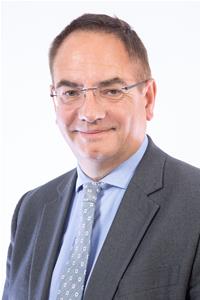
Adrian Lawrence FCA is the founder of FD Capital and a Fellow of the Institute of Chartered Accountants in England and Wales (ICAEW). He holds a BSc from Queen Mary College, University of London, and has over 25 years of experience as a Chartered Accountant and finance leader working with private, PE-backed and owner-managed businesses across the UK. He founded FD Capital to connect growing businesses with the Finance Directors and CFOs they need to scale — and personally interviews candidates for senior finance appointments.



 Accredited Member of GBC
 Accredited Member of LWF
 Carbon Offset via TreeNation