


How to Become a Head of Compliance at an FCA Firm

Head of Compliance is one of the most consequential roles in a regulated firm — and at most firms it is a controlled function, the FCA’s SMF16 Compliance Oversight role, carrying personal accountability under the Senior Managers and Certification Regime. This article sets out the realistic route to the role: the experience that builds toward it, the qualifications that help, the regulatory responsibilities it carries, and how to position yourself to step up.
What the role actually is
At an FCA-regulated firm, the Head of Compliance typically holds SMF16, the Compliance Oversight function — one of the senior management functions under SM&CR. The holder is responsible for the firm’s compliance with the regulatory system: overseeing the compliance framework, engaging with the regulator, advising the business on its obligations, and ensuring the firm meets its conduct requirements. Because it is a senior management function, the holder carries personal accountability — they must take reasonable steps to ensure the area they are responsible for is controlled effectively, and can be held individually responsible where it is not.
This is worth understanding before pursuing the role: it is not simply a senior compliance job, it is a regulated position with individual regulatory liability attached. That is part of what makes it demanding, and part of what makes experienced holders valuable.
The experience that builds toward it
There is no single path, but the route almost always runs through hands-on compliance experience across a range of the areas a firm has to manage. A future Head of Compliance typically builds depth in several of the following before stepping up:
- Regulatory advisory — interpreting FCA rules and advising the business on how to meet them.
- Compliance monitoring — designing and running the checks that assure the firm is meeting its obligations.
- Financial crime — exposure to anti-money-laundering and financial-crime frameworks, often overlapping with the MLRO function.
- Regulatory engagement — direct experience of dealing with the FCA, handling information requests, and managing supervisory relationships.
- Conduct and the Consumer Duty — increasingly central, particularly in retail and consumer-credit firms.
Breadth matters because the Head of Compliance has to hold the whole framework, not a single specialism. Someone who has only ever done monitoring, or only financial crime, usually needs to broaden before they are ready for the top role.
Qualifications and professional standing
Formal qualifications are not a strict legal requirement for SMF16, but they help both in building capability and in demonstrating fitness. Compliance-specific qualifications — such as those offered by professional bodies in the field — are common and valued. A background in law, accountancy or a related discipline can be an asset, and some Heads of Compliance come from a chartered-accountancy or audit background where the ICAEW qualification provides a strong foundation in controls and governance. What matters most, though, is demonstrable competence and integrity: under SM&CR the firm must satisfy itself, and the regulator, that the holder is fit and proper for the role.
The fit and proper test
Anyone stepping into SMF16 must meet the FCA’s fit and proper standard, assessed across honesty and integrity, competence and capability, and financial soundness. For an aspiring Head of Compliance this means building not just a track record of capability but a clean regulatory and professional history. The firm appointing you is required to assess this, and the FCA can review it — it is a genuine gate, not a formality.
How to position yourself for the step up
For a senior compliance professional aiming at the role, the practical moves are consistent. Broaden across the compliance framework rather than deepening endlessly in one specialism. Get exposure to regulatory engagement, because a Head of Compliance has to own the FCA relationship. Understand SM&CR from the inside — ideally holding a certified or senior function that builds toward it. Develop the leadership and board-facing skills the role demands, because much of it is advising and influencing senior decision-makers. And build the professional standing — qualifications, reputation, clean record — that the fit and proper test requires.
It is also worth being realistic about firm type. Stepping into SMF16 at a large, complex firm is a different proposition from doing so at a smaller or newly-authorised one, where the route can be faster but the breadth of personal responsibility greater. Many compliance leaders make the step up at a smaller firm and grow from there.
What the role looks like day to day
It is worth being realistic about what the job involves once you hold it, because the day-to-day shapes whether it suits you. A Head of Compliance spends much of their time advising the business — being the person the commercial teams come to before they do something, and the person who has to say no, or find a compliant way to yes. They own the compliance monitoring programme and the assurance it provides. They manage the relationship with the FCA, including notifications, information requests and any supervisory contact. They keep the firm’s compliance framework current as rules change. And they report to the board and relevant committees on the firm’s regulatory health.
It is a role that blends technical regulatory knowledge with influence and judgement. The best Heads of Compliance are not the ones who know the most rules; they are the ones who can apply them commercially, hold the line where it matters, and be trusted by both the business and the regulator.
Smaller firm or larger firm?
The route to the role differs by firm size, and so does the role itself. At a smaller or newly-authorised firm, the step up can come sooner, and the Head of Compliance often wears several hats — sometimes combining SMF16 with the MLRO function (SMF17) or other responsibilities. The breadth of personal responsibility is greater, but so is the opportunity to hold the whole framework early. At a larger firm, the role is usually reached later, is more specialised, and sits within a bigger compliance function with more support — but carries the complexity that scale brings. Neither is inherently the better route; they suit different people and different stages of a career.
A realistic timeline
There is no fixed timeline, but the step to a first Head of Compliance role typically comes after a number of years building breadth across the compliance framework and demonstrating the judgement the role requires. Candidates who broaden deliberately, seek regulatory-engagement exposure, and build toward SM&CR responsibility tend to get there sooner than those who stay narrow. Working with a recruiter who specialises in regulated appointments can also help — both in identifying the firms where a step up is realistic, and in positioning your experience for the fit and proper assessment the role requires.
How FD Capital helps
FD Capital recruits Heads of Compliance and other SM&CR function holders into FCA-regulated firms, and works with senior compliance professionals aiming at the step up. Because Adrian Lawrence FCA conducts senior interviews personally and the firm specialises in regulated appointments, we can advise both firms hiring for SMF16 and candidates building toward it on what the role genuinely requires. If you are aiming at a Head of Compliance role, or hiring for one, we can help.
Call 020 3287 9501 or email recruitment@fdcapital.co.uk to discuss a Head of Compliance (SMF16) appointment, or your route toward one.
FD Capital — SMF16 and Compliance Leadership Recruitment
Fellow of the ICAEW | Placing Heads of Compliance, MLROs and SM&CR function holders into FCA-regulated firms since 2018. We recruit permanent, interim and fractional finance leaders across the UK. 4,600+ network. 160+ placements. Shortlists in 3–7 working days.
Related reading and services
The Compliance Oversight function explained in full.
Specialist recruitment across the senior managers regime.
Specialist compliance recruitment for regulated firms.
Senior compliance and risk leaders for regulated firms.
About the author. Adrian Lawrence FCA is the founder of FD Capital Recruitment and a Fellow of the Institute of Chartered Accountants in England and Wales. Adrian holds a BSc from Queen Mary College, University of London and an ICAEW practising certificate in his own name. Before founding FD Capital in 2018 he worked across private, listed, owner-managed and PE-backed businesses, including CFO-level roles. That direct operating experience informs how FD Capital assesses senior finance candidates and briefs clients on what to look for in an appointment. Adrian personally leads every compliance mandate FD Capital accepts and conducts candidate interviews himself for senior appointments.
Verify ICAEW membership → | FD Capital Recruitment Ltd, Companies House no. 13329383, operated by an ICAEW-registered practice.
This guide is general information for finance leaders and does not constitute legal, regulatory or professional advice. Businesses should take their own advice on their specific circumstances. Regulatory positions described are current as at mid-2026 and are developing; readers should check the FCA’s latest publications.
Related posts:
Quality vs quantity in SAR filing: what NCA reviewers look for
May 18, 2026What Adequate Compliance Resourcing Costs
October 25, 2026Sanctions Screening for Payment Firms: Speed vs Accuracy
June 5, 2026FCA impact tolerances: setting, testing and reviewing
May 27, 2026SMF16 and SMF17: One Person or Two?
September 10, 2026The FCA's Annex 1 Crackdown: What It Means for Hiring
August 10, 2026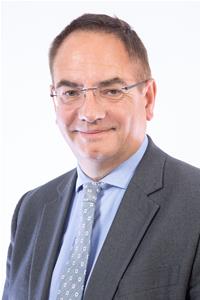
Adrian Lawrence FCA is the founder of FD Capital and a Fellow of the Institute of Chartered Accountants in England and Wales (ICAEW). He holds a BSc from Queen Mary College, University of London, and has over 25 years of experience as a Chartered Accountant and finance leader working with private, PE-backed and owner-managed businesses across the UK. He founded FD Capital to connect growing businesses with the Finance Directors and CFOs they need to scale — and personally interviews candidates for senior finance appointments.



 Accredited Member of GBC
 Accredited Member of LWF
 Carbon Offset via TreeNation