


How CFOs Lead Change in Organisations

How does a UK CFO actually lead organisational change effectively — given that change failure rates remain stubbornly high, that the CFO’s authority is rarely sufficient on its own to drive change across an enterprise, and that the visible cost of failed change programmes routinely runs into multiples of the financial benefits any successful change would have delivered?
CFO-led change is one of the higher-stakes dimensions of senior finance leadership. Major change programmes — finance function transformation, business model evolution, M&A integration, cost reduction restructuring, digital transformation, post-crisis rebuilding, ERP implementation, organisational restructuring — frequently consume substantial CFO attention over twelve to twenty-four month periods. The financial implications run into millions; the operational implications affect functions across the business; the personal stakes for the CFO are material if the programme fails. Despite this, the body of academic and practitioner research on change consistently suggests that 50-70% of major change programmes fail to deliver their intended benefits, with execution rather than strategy being the dominant failure mode.
The CFOs who lead change effectively don’t simply have stronger strategic instincts than peers; they apply specific operational disciplines that compound across the change programme’s life. They sequence change deliberately rather than launching multiple initiatives concurrently. They invest substantially in communication and stakeholder engagement before resistance becomes entrenched. They build measurement infrastructure that distinguishes genuine progress from activity. They use external capacity — interim and fractional leadership — to supplement permanent resources where the change demands more capacity than steady-state structures support. They calibrate pace to the organisation’s actual absorption capacity rather than imposing pace that produces visible activity but not real change.
This guide sets out how UK CFOs lead organisational change effectively. The change types that fall within typical CFO scope, the confidence and posture that effective change leadership requires, the sequencing discipline that prevents organisational shock, the stakeholder engagement work that supports rather than impedes the programme, the measurement framework that tracks substantive progress, the role of interim and fractional leadership in supporting change capacity, the common pitfalls that undermine well-designed change, and the practical disciplines that compound across multi-year change programmes.
It is written from the perspective of FD Capital’s team — a specialist finance recruitment firm placing senior finance leaders into UK businesses since 2018, with extensive engagement on change-intensive CFO and FD appointments alongside our broader senior finance recruitment work.
Call 020 3287 9501 or email recruitment@fdcapital.co.uk to discuss CFO requirements where change leadership is part of the role.
Fellow of the ICAEW | Placing CFOs and FDs with substantive change leadership track record into UK businesses since 2018 — finance transformation, M&A integration, cost programmes, digital transformation, post-crisis rebuilding, and the wider organisational change CFOs lead or co-lead
Our network includes CFOs with direct experience leading major change programmes successfully — and the operational discipline that distinguishes effective change leaders from those whose change programmes deliver activity without sustained results. Adrian personally screens candidates for change-intensive appointments. 4,600+ network. 160+ placements.
The Change CFOs Typically Lead in UK Businesses
Specific change types fall consistently within UK CFO scope, either as primary leadership or as substantive co-leadership with the CEO and other executives.
Finance function transformation. Restructuring the finance function — process redesign, technology deployment, role consolidation, capability development, outsourcing decisions, geographic centralisation — sits within direct CFO authority and is a recurring feature of senior CFO careers. Strong CFOs lead finance transformation as substantive multi-year programmes rather than as periodic restructuring exercises.
ERP and systems implementation. Major ERP implementations (Oracle, SAP, Microsoft Dynamics, NetSuite, Workday) and adjacent systems (FP&A platforms, consolidation tools, treasury systems) are typically CFO-led change programmes that affect multiple functions across the business. The CFO’s leadership combines functional ownership of the system’s primary users with the broader business case responsibility.
Cost transformation. Material cost reduction programmes — typically 5-15% of cost base over 12-24 months — sit within CFO scope when they affect multiple functions and require coordination across the business. Cost transformation differs from periodic cost discipline through its scale, its programme structure, and its cross-functional nature. See our companion CFO Cost Control & Reduction.
M&A integration. Acquisitions trigger integration work that materially involves CFO leadership — system integration, control environment harmonisation, process consolidation, finance team integration, supplier rationalisation, real estate consolidation. The integration work typically runs 12-24 months and affects every function in both businesses.
Business model evolution. Where the business is shifting commercial model (transactional to subscription, B2C to B2B, domestic to international, product to platform), the financial dimensions of the shift require substantive CFO leadership alongside commercial leadership. The pricing economics, unit economics, working capital pattern, and reporting infrastructure all change with business model evolution.
Operational restructuring. Organisational restructuring — function consolidation, geographic rationalisation, span-of-control adjustments, role redesign — typically requires CFO leadership on the financial dimensions even where HR or operations leads the broader programme. Severance economics, location decisions, system implications, and compensation restructuring all involve substantial CFO contribution.
Digital transformation. Beyond ERP-specific implementation, broader digital transformation — automation programmes, data platform investment, AI deployment, customer experience digitalisation — engages CFO leadership through investment decisions, ROI analysis, and the ongoing operating model implications. See our companion CFO-Led Digital & Finance Transformation.
Post-crisis rebuilding. Following crises (financial difficulty, regulatory event, reputational damage, leadership departure), substantial change programmes restore the business to sustainable operation. CFO leadership is central to post-crisis change because financial restoration is typically the foundation of broader recovery.
Pre-IPO transformation. Businesses preparing for IPO undertake substantial transformation — control environment upgrade, public-company-grade reporting infrastructure, governance restructuring, new accounting policy decisions, investor relations capability. The transformation typically runs 18-36 months and is largely CFO-led.
Pre-exit transformation. Businesses preparing for sale or PE exit similarly undertake transformation — typically smaller in scope than IPO preparation but still substantial. The work focuses on positioning the business attractively for the exit process.
How CFOs Can Lead Organisational Change with Confidence
Confidence in change leadership isn’t the absence of doubt; it’s the demonstrated ability to act decisively despite legitimate uncertainty. Strong CFOs build this confidence through specific disciplines.
Substantive analytical foundation. Confidence rests on substantive analysis of why the change is needed, what specific outcomes it will produce, what the realistic timeline and cost are, what the alternative scenarios look like. Change programmes built on weak analytical foundation lose momentum when challenged; change programmes built on strong foundation withstand scrutiny because the analysis is genuinely sound.
Clear articulation of the change rationale. Strong change leaders can explain the change’s rationale concisely — what’s wrong with the current state, what the future state needs to look like, why the proposed change produces that future state, what happens if the change doesn’t proceed. The articulation works at multiple levels — three sentences for casual conversation, ten minutes for executive committee, an hour for substantive Board engagement.
Genuine acknowledgement of difficulty. Strong change leaders acknowledge the difficulty honestly. Major change is hard. People will be displaced. Capabilities the business has relied on will need to be replaced. Investment will be substantial. Risks are real. Acknowledging these dimensions builds credibility; minimising them undermines it when the difficulties materialise.
Demonstrable personal commitment. Change leaders signal personal commitment through visible engagement — substantive presence in working sessions, willingness to engage with difficult conversations, accountability for specific outcomes, public association with the programme. CFOs who position themselves as sponsors without operational engagement signal that the change is somebody else’s work.
Calibrated decision-making pace. Strong change leadership combines the patience to ensure decisions are right with the willingness to make decisions before all information is complete. Change programmes paralysed by analysis don’t progress; change programmes that proceed without adequate analysis encounter failure modes that better preparation would have surfaced. The calibration between these failure modes is itself a leadership capability.
Resilience through setbacks. Major change programmes encounter setbacks — pilot programmes that don’t work, system implementations with unexpected issues, organisational resistance that emerges later than anticipated, external events that disrupt timing. Strong change leaders absorb setbacks while maintaining programme momentum; weaker leaders treat each setback as evidence the programme should be reconsidered.
Public composure under challenge. Change programmes attract challenge — from peers, from team members, from sponsors, from external stakeholders. Strong change leaders engage with challenge professionally rather than defensively, treating challenge as an opportunity to refine the programme rather than as criticism to be deflected.
Personal sustainability discipline. Multi-year change programmes are tiring. Strong change leaders manage personal sustainability deliberately — the basics of sleep, exercise, time off, relationships outside work — recognising that sustained effectiveness over years requires it. The discipline isn’t peripheral; it’s central to maintaining the leadership presence the programme depends on. See our companion CFO Soft Skills: Culture, Trust and Influence.
How CFOs Sequence Change to Avoid Organisational Shock
Sequencing — the order and pace of change activities — is one of the most underappreciated dimensions of effective change leadership. Strong sequencing supports organisational absorption; weak sequencing produces shock that undermines even technically sound change programmes.
Capacity-aware pacing. Organisations have finite change absorption capacity. Pushing more change than the organisation can absorb produces visible activity (meetings, training, communications) without genuine adoption (behaviour change, capability development, sustained practice). Strong CFOs calibrate pace to actual absorption capacity rather than imposing pace based on programme management timelines.
Pre-conditions before main programmes. Major change programmes typically require pre-conditions — capability that doesn’t currently exist, data quality that hasn’t yet been established, governance structures that need to be in place, control environments that need to operate. Strong sequencing addresses pre-conditions explicitly rather than launching main programmes on assumptions about pre-conditions that don’t actually hold.
Foundation work before visible change. Some change is invisible (data foundation work, control upgrades, capability building) and some change is visible (process redesign, role changes, system go-lives). Strong sequencing addresses foundation work before visible change rather than launching visible change on weak foundations.
Pilots before scaled rollout. Strong change programmes pilot before scaling — proving the change works in limited scope before extending to the full organisation. Pilots surface execution issues at manageable scale; scaled rollout without pilots imposes execution issues across the full organisation simultaneously.
Build success momentum. Early visible wins support broader organisational support for the change. Strong sequencing identifies opportunities for early wins and delivers them visibly, building the momentum that supports harder subsequent phases. Programmes that deliver no visible benefit for many months struggle to maintain support through to substantive completion.
Avoid concurrent major change. Multiple major change programmes running concurrently typically produce execution failure across both. The organisation’s attention divides; the integration costs across programmes accumulate; the risk of programme conflict increases. Where possible, strong CFOs sequence major change rather than running multiple programmes concurrently.
Account for external timing constraints. Change programmes operate within external timing constraints — year-end reporting periods, regulatory deadlines, peak trading periods, audit windows. Strong sequencing accounts for these constraints rather than imposing change activities during periods when the organisation needs to focus on routine operational priorities.
Handle the dependent change. Many change initiatives have dependencies — A must complete before B can begin, C requires output from D, E only works if F is in place. Strong sequencing maps dependencies explicitly and orders activities to respect them rather than running activities concurrently and discovering dependency conflicts during execution.
Plan for stabilisation periods. Following major change, the organisation needs stabilisation time before the next change begins. Strong programmes include explicit stabilisation periods rather than launching the next initiative immediately on completion of the previous one. The pause supports embedding rather than treating each change as a fresh disruption.
Stakeholder Engagement During Change
Change programmes succeed or fail substantially through stakeholder engagement quality. Strong CFOs invest substantially in stakeholder engagement before resistance becomes entrenched.
Stakeholder mapping at programme start. Comprehensive identification of stakeholders affected by the change, with assessment of their position (supportive, neutral, resistant), influence over outcomes (high, medium, low), and the engagement approach appropriate to each. The mapping is updated periodically as positions evolve.
Differential engagement approach. Different stakeholders need different engagement. Senior peers benefit from substantive analytical discussion. Affected team members benefit from clear communication about what changes for them specifically. Customers and suppliers benefit from confidence-building about service continuity. Generic engagement misses what each stakeholder group actually needs.
Listening before persuading. Strong stakeholder engagement starts with listening — understanding stakeholders’ concerns, surfacing their priorities, identifying issues the change programme hasn’t anticipated. Listening before persuading produces engagement that improves the change rather than just defending it.
Substantive responses to concerns. Where stakeholders raise concerns, strong responses engage with the substance rather than restating the change rationale. Some concerns warrant programme adjustment; some warrant substantive analytical response demonstrating the concern is addressed; some warrant honest acknowledgement that the concern represents real cost the change programme must accept. Generic responses signal that listening was performative.
Regular communication rhythm. Throughout the programme, regular communication rhythm — weekly or biweekly updates depending on programme intensity — supports sustained stakeholder engagement. Communication that disappears between major events allows stakeholder uncertainty to grow into resistance.
Clear ownership for affected stakeholders. Each affected stakeholder group should know who is responsible for their engagement throughout the programme — typically the CFO directly for senior stakeholders, programme leadership for middle management, function heads for their direct reports, HR for affected employees broadly. Ownership clarity prevents stakeholder groups falling between leadership cracks.
Two-way mechanisms. Strong stakeholder engagement includes two-way mechanisms — feedback channels that surface concerns from across the organisation, surveys that quantify sentiment, periodic listening sessions in different parts of the business. Single-direction communication (programme tells stakeholders) misses the substantive engagement that strong programmes require.
Honesty about difficult dimensions. Some change programmes involve difficult dimensions — redundancies, role downgrades, geographic relocations, capability that won’t be retained. Strong stakeholder engagement handles these honestly rather than minimising them. The honesty builds credibility for the broader programme; minimisation undermines it when the difficult dimensions become visible.
The Measurement Framework for Change Programmes
Strong change programmes have substantive measurement that distinguishes activity from genuine progress. Weak measurement reports activity (meetings held, training delivered, communications sent) without showing whether change is actually happening.
Outcome metrics versus activity metrics. Activity metrics (training delivered, communications sent) are necessary but insufficient. Outcome metrics measure whether the change is producing intended results — process cycle time reduction, error rate improvement, customer satisfaction movement, productivity gains. Strong programmes track outcome metrics as primary measures with activity metrics as supporting indicators.
Leading versus lagging indicators. Lagging indicators (financial benefit realised, productivity improvement achieved) confirm whether the change has worked but aren’t useful for in-flight management. Leading indicators (adoption rates, capability assessment scores, behaviour change indicators) signal trajectory before lagging indicators show results. Strong programmes track both.
Baseline establishment before change. Without proper baseline measurement before change starts, subsequent improvement claims lack credibility. Strong programmes invest in baseline measurement explicitly, capturing pre-change state across the metrics that will subsequently track progress.
Realistic benefit measurement. Programme benefit claims often inflate over time — initial optimistic estimates ratify into reported benefits without rigorous measurement. Strong programmes apply realistic benefit measurement methodology, distinguishing genuine benefit from accounting reallocation.
Cost tracking against budget. Change programmes routinely overspend against initial budget. Strong programmes track cost against budget with the same rigour as benefit measurement, surfacing overspend patterns early enough to support response.
Dependency tracking. Where change activities have dependencies, tracking whether dependencies are being met in time supports programme management. Late completion of dependencies cascades into delays across subsequent activities.
Risk register maintenance. Active risk register identifying programme risks, mitigation actions, and trigger points. The register is reviewed periodically and updated as risks evolve. Static risk registers signal that risk management is performative.
Stakeholder sentiment tracking. Where the programme depends on stakeholder engagement (which most major programmes do), sentiment tracking through periodic surveys, leadership listening, and pulse measurement supports awareness of where stakeholder support is strong or weakening.
Board-level reporting cadence. Strong programmes maintain Board-level reporting cadence — typically monthly to substantively engage the Board with progress, blockers, and decisions needed. Reporting that fades during the programme allows Board oversight to weaken when it matters most.
Managing Financial Change Effectively with Interim Leadership
One of the underappreciated dimensions of major change programmes is the role of interim and fractional leadership in supporting change capacity. Permanent finance leadership has steady-state responsibilities that don’t pause during change programmes; major change programmes need substantial dedicated capacity that exceeds what permanent structures support.
Specific scenarios where interim and fractional leadership add particular value to change programmes:
Programme leadership as dedicated full-time role. Major transformation programmes benefit from dedicated full-time leadership — typically an interim CFO or transformation director who owns the programme without competing steady-state responsibilities. The dedicated leadership produces the focused attention major programmes need; permanent CFO leadership combined with steady-state work produces divided attention.
Specialist capacity for specific phases. Specific programme phases — system implementation, post-merger integration, post-crisis stabilisation — benefit from interim specialist leadership with prior comparable experience. The specialist leadership compresses the programme timeline and reduces execution risk; generalist leadership without prior specific experience often takes longer and produces less reliable outcomes.
Functional capacity through change. Beyond programme leadership, functional capacity within finance often needs supplementing during change. Interim controllers, fractional FP&A leadership, specialist consolidation expertise — the supplementary capacity supports the function through the change without permanent appointment that won’t be needed once the change completes.
Independent perspective. Interim leaders bring independent perspective that permanent leaders sometimes can’t. The independence allows surfacing of difficult issues that internal politics may have suppressed and proposing changes that incumbent leadership may have been reluctant to advocate.
Pattern recognition from prior change. Interim leaders who have led comparable change programmes elsewhere bring pattern recognition that benefits the current programme directly. The pattern recognition cannot be replicated by single-employer career paths; it accumulates across multiple change programmes that interim leaders work through.
Bridge through permanent appointment. Where the programme needs leadership in place before the permanent successor is appointed, interim leadership bridges the gap. The bridge is particularly valuable when the change programme can’t wait for permanent recruitment to complete.
Defined endpoint discipline. Interim engagements have defined endpoints. The endpoint discipline supports completion-orientated work rather than perpetuation. Permanent leaders sometimes allow programmes to extend without genuine completion; interim leaders working toward defined exit produce different completion dynamics.
Cost calibration to programme need. Interim engagement costs match programme duration rather than committing to permanent appointment that may not be needed once the change completes. The cost calibration supports the business case for substantial change leadership investment that permanent appointment economics may not justify.
For specific interim engagement context see our companion The Interim CFO: When, Why and How.
Common Pitfalls in CFO-Led Change
Specific recurring patterns undermine CFO-led change programmes. Recognising these supports avoiding them.
Over-reliance on the business case. Strong business cases support programme initiation but don’t drive successful execution. CFOs sometimes assume that business case quality predicts programme success; in practice, execution discipline matters more than business case sophistication.
Insufficient change management capability. Change management — communication, training, behaviour change support, resistance management — is a specialist discipline. Treating it as adjacent to programme management or as something line managers handle on top of normal duties produces weak change management. Strong programmes invest specifically in change management capability.
Underestimating organisational resistance. Major change typically triggers more resistance than initial planning anticipates. CFOs who underestimate resistance find themselves consuming substantial time on stakeholder engagement that should have been planned in. Strong programmes plan for resistance explicitly.
Premature scaling. Successful pilots sometimes get scaled before the conditions that made them successful are understood. The conditions don’t replicate; the scaled programme fails despite the successful pilot. Strong programmes understand pilot success conditions before scaling.
Inadequate post-implementation support. Programme attention typically peaks at implementation and then drops. Without sustained post-implementation support, the changes don’t embed and reverse over time. Strong programmes maintain support through embedding rather than declaring victory at implementation.
Programme leader departure mid-flight. CFO departure during major change programmes — for promotion, role change, or external opportunities — disrupts programmes substantially. Strong leaders maintain commitment through completion; where departure is unavoidable, strong succession planning preserves programme momentum.
Sponsor disengagement. CEO and Board sponsorship attention typically peaks at programme initiation and erodes over time as other priorities emerge. Strong CFOs maintain active sponsorship engagement throughout the programme rather than allowing sponsorship to drift.
Hidden cost accumulation. Programme costs typically accumulate beyond initial budget — additional consulting, extended timelines, expanded scope, contingency needs. Strong programmes track cost rigorously and engage Board with overspend transparently rather than allowing hidden cost accumulation to surface late.
Activity confusion with progress. Activity metrics are easier to report than outcome metrics. Programmes lacking outcome measurement sometimes report substantial activity while delivering limited substantive change. The distinction becomes visible only when outcome measurement eventually catches up with reality.
Cultural dimension underweighted. Change programmes that focus on systems, processes, and structures while underweighting cultural dimensions often deliver technical implementation without behaviour change. Strong programmes engage culture deliberately rather than assuming behaviour will follow systems.
Building Change Capability in the Finance Function
Beyond specific change programmes, sustained CFO contribution involves building change capability within the finance function. Functions with strong change capability handle multiple change programmes well; functions without it struggle even with well-designed programmes.
Specific elements of change capability:
Senior team members with change track record. Recruitment that prioritises change track record alongside technical capability — finance controllers who have led implementation programmes, FP&A leads who have rebuilt forecasting, transformation leads who have completed comparable programmes elsewhere.
Project management discipline. Senior finance team members who can run programmes professionally — defined deliverables, milestone management, risk management, stakeholder engagement, completion discipline. Project management capability is itself a finance function asset.
Training in change management methodologies. Specific training on change management approaches (Prosci ADKAR, Kotter’s eight steps, sector-specific approaches). The training supports common vocabulary and methodology across the team.
Cross-functional engagement experience. Finance team members who have worked cross-functionally on operational programmes bring stronger stakeholder engagement instinct than purely finance-focused career paths. Cross-functional experience is itself a development priority.
Systems and analytical infrastructure. Modern finance technology stack (ERP, FP&A platform, BI tools, automation) supports change capability. Outdated technology constrains what change programmes can deliver. Sustained investment in technology infrastructure supports broader change capability.
Process documentation discipline. Documented processes support change because they make current state explicit. Without documented processes, change programmes operate on tacit knowledge that’s harder to modify systematically.
Continuous improvement culture. Functions that continuously improve at the margin develop the cultural orientation that supports major change. Functions that resist marginal improvement struggle when major change becomes necessary.
External perspective through advisors and benchmarking. Strong finance functions maintain external perspective — through consulting engagements where appropriate, peer benchmarking, professional body participation, conference attendance. The external perspective supports recognising when change is needed before it becomes urgent.
How FD Capital Works on Change-Intensive CFO Placements
FD Capital places CFOs into UK businesses where change leadership is part of the role’s expected contribution — finance transformation, M&A integration, cost programmes, digital transformation, post-crisis rebuilding, and the wider organisational change CFOs lead or co-lead. Our matching specifically prioritises substantive change leadership track record alongside general CFO capability.
Our network includes CFOs with direct experience leading major change programmes successfully — and our reference work specifically explores change leadership track record rather than treating change as adjacent to general CFO performance. We match candidates to the specific change context the business faces — finance function transformation, integration leadership, transformation programme leadership, post-crisis rebuilding, or specific situational requirements.
Where the change programme would benefit from interim or fractional leadership rather than permanent appointment, we work with the business on the appropriate engagement model and place senior interim or fractional leaders with relevant change track record.
Adrian personally screens candidates for change-intensive appointments. Initial introduction is typically within 48 hours for urgent requirements, with full shortlist within eight working days for less time-pressured engagements.
Initial consultation is confidential and at no charge. Call 020 3287 9501 or email recruitment@fdcapital.co.uk to discuss CFO requirements where change leadership is part of the role.
Related Reading
- CFO-Led Digital & Finance Transformation — digital transformation specifically
- CFO Strategic Leadership: The Complete UK Guide — strategic CFO leadership context
- CFO Soft Skills: Culture, Trust and Influence — soft skills supporting change leadership
- CFO & FD Boardroom Influence — Board engagement during change
- CFO Cost Control & Reduction — cost transformation context
- The Interim CFO: When, Why and How — interim leadership for change programmes
- Interim CFO for Crisis & Turnaround — crisis-driven change leadership
- CFO Leadership in Crisis and Recession — change through external shock
- CFO Value Creation in PE Portfolio Companies — PE portfolio change context
- The CFO’s Guide to AI and Automation in Finance — automation as change vector
FD Capital Recruitment Services
- CFO Recruitment — permanent CFO search
- CFO Executive Search — retained senior search
- Finance Director Recruitment — permanent FD search
- Interim CFO — time-limited CFO cover including change leadership
- Interim Finance Director — interim FD cover
- Turnaround FD — turnaround-specialist FD placement
- Fractional CFO — fractional CFO recruitment for change support
External References
- ICAEW — professional body for Chartered Accountants
- ICAEW Corporate Finance Faculty — corporate finance professional resources
- UK Corporate Governance Code — governance framework relevant to change programmes
- Institute of Directors — director qualifications and professional resources
- Companies Act 2006 — director duties applicable through change programmes
About the Author
Adrian Lawrence FCA is the founder of FD Capital Recruitment and a Fellow of the Institute of Chartered Accountants in England and Wales (ICAEW member record). Adrian holds a BSc from Queen Mary College, University of London and an ICAEW practising certificate in his own name.
FD Capital has been placing CFOs and Finance Directors with substantive change leadership track record into UK businesses since 2018 — across finance transformation, M&A integration, cost programmes, digital transformation, post-crisis rebuilding, pre-IPO transformation, and the wider organisational change senior finance leaders lead or co-lead. Our network includes candidates with direct experience leading major change programmes successfully and our reference work specifically explores change leadership track record. Adrian personally screens candidates for change-intensive appointments. FD Capital Recruitment Ltd (Companies House 13329383) is associated with Adrian’s ICAEW registered Practice.
Speak to FD Capital about a change-intensive CFO requirement: Call 020 3287 9501 or email recruitment@fdcapital.co.uk.
Related posts:
The Evolution of the CFO: Navigating the Shift from Financial Steward to Strategic Visionary
March 29, 2025How CFOs Are Using AI to Forecast with Unmatched Accuracy
November 28, 2025Harnessing Workforce Analytics: A CFO's Guide to Cost Reduction and Enhanced Productivity
March 23, 2025Fractional CFOs for PE-Backed Companies
June 29, 2025How an Outsourced CFO Can Increase Company Valuation Before Fundraising or Exit
February 25, 2026How to Become a Fractional CFO in the UK
July 27, 2025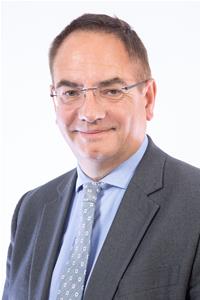
Adrian Lawrence FCA is the founder of FD Capital and a Fellow of the Institute of Chartered Accountants in England and Wales (ICAEW). He holds a BSc from Queen Mary College, University of London, and has over 25 years of experience as a Chartered Accountant and finance leader working with private, PE-backed and owner-managed businesses across the UK. He founded FD Capital to connect growing businesses with the Finance Directors and CFOs they need to scale — and personally interviews candidates for senior finance appointments.



 Accredited Member of GBC
 Accredited Member of LWF
 Carbon Offset via TreeNation