


Unlocking Value: How Finance Transformation Drives Business Growth

Most finance transformation programmes — ERP migration, FP&A platform implementation, finance team restructuring, reporting modernisation — don’t fail because the technology choice was wrong. They fail because of who’s leading them. The most common pattern behind a stalled, overspent or under-delivered transformation programme is a CFO trying to run it alongside business-as-usual finance leadership, rather than a dedicated transformation leader owning it end to end.
This is worth taking seriously before a programme launches, not once it’s already six months behind.
Two Operating Modes That Don’t Mix Well
Running business-as-usual finance and leading a transformation programme require genuinely different operating modes, and asking one person to do both well is asking more than most roles can sustainably deliver.
BAU finance leadership is reactive by necessity — daily presence, immediate decisions on cash, reporting deadlines, team management, board and investor queries that can’t wait. It rewards being interruptible and responsive.
Transformation leadership needs the opposite: sustained, uninterrupted focus on programme architecture, vendor and implementation partner management, stakeholder alignment across departments, and design discipline that holds up over an 18–30 month programme. It rewards protected time and consistency of attention.
A CFO trying to hold both roles at once tends to default to whichever is more urgent on a given day — which is almost always BAU. The transformation programme absorbs whatever time is left over, which in practice means it slips.
The Warning Signs Worth Watching For
- Timeline drift without a clear cause. If a programme is behind schedule and nobody can point to a specific technical blocker, the more common explanation is leadership bandwidth, not technology.
- Scope creep going unchecked. Without dedicated ownership, transformation programmes tend to accumulate scope as different stakeholders each add requirements, with no one holding the line on the original business case.
- Budget overspend against a moving timeline. Cost and schedule slippage together, rather than either alone, is a strong signal that programme governance — not vendor performance — is the underlying issue.
- The CFO visibly stretched across both roles, with board reporting on the transformation programme becoming thinner or less specific over time.
What Dedicated Transformation Leadership Looks Like
The fix isn’t more technology or a bigger budget — it’s separating the two roles. In practice this takes one of three shapes:
A permanent Head of Finance Transformation, reporting to the CFO, owning the programme end to end while the CFO stays focused on BAU leadership and retains oversight rather than delivery responsibility. This suits businesses expecting an ongoing cycle of transformation work rather than a single discrete programme.
An interim transformation director, brought in specifically for the duration of a defined programme. This is often the more proportionate route for a single, time-bound transformation — ERP migration, a reporting modernisation project — where a permanent headcount addition isn’t justified once the programme completes.
External consultancy or implementation-partner leadership, working under explicit CFO oversight rather than CFO direct delivery. This can work well for the technical implementation itself, but still needs someone internal holding programme accountability — consultancy leadership without an accountable internal owner tends to reproduce the same governance gap in a different form.
What to Look For When Recruiting Transformation Leadership
- Programme governance experience — stage-gated decision points, explicit go/no-go milestones, and the discipline to hold a programme to its original business case rather than letting scope drift.
- Realistic timeline judgement. Substantial multi-stream transformation programmes genuinely take 18–30 months in most UK mid-market businesses. A candidate who commits to compressed 9–12 month timelines for equivalent scope is a warning sign, not a strength.
- Stakeholder management across departments, not just within finance — transformation programmes touch operations, sales and IT, and need a leader who can hold those relationships.
- Direct implementation experience with the relevant systems (ERP, FP&A platforms, consolidation tools), rather than purely strategic oversight of a programme someone else built.
Permanent, Interim, or a Transformation CFO?
Where the CFO role itself needs to be transformation-led from the outset — a business bringing in new leadership specifically to modernise the finance function as part of a wider change programme — a Transformation CFO or FD appointment can be the right structure, rather than adding a separate transformation layer beneath an existing CFO. The right choice depends on whether the transformation is a defined, time-bound project sitting alongside ongoing BAU leadership, or a more fundamental reset of how the finance function itself operates.
How FD Capital Can Help
FD Capital recruits CFOs, Finance Directors and dedicated transformation leaders for UK businesses running ERP migrations, FP&A implementations and broader finance function change programmes. If your transformation programme has stalled, or you’re planning one and want to get the leadership structure right from the start, we’re happy to talk through your brief.
Related Services
Every transformation and interim search is led personally by Adrian Lawrence FCA.
PRACTICE AREA
Transformation CFO & FD
Senior finance leaders specifically experienced in leading finance function change programmes, not just overseeing them alongside BAU.
PRACTICE AREA
Interim Finance Director
Defined-term senior finance leadership for businesses running a discrete transformation or change programme.
Every transformation and interim search is led personally by Adrian Lawrence FCA.
References
- ICAEW — Finance in a Digital World
- AICPA & CIMA — Finance Function Resources
Adrian Lawrence FCA is the founder of FD Capital and a Fellow of the Institute of Chartered Accountants in England and Wales (ICAEW). He holds a BSc from Queen Mary College, University of London, and has over 25 years of experience as a Chartered Accountant and finance leader working with private, PE-backed and owner-managed businesses across the UK. He founded FD Capital in 2018 to connect growing businesses with the Finance Directors and CFOs they need to scale, and personally interviews candidates for senior finance appointments. View Adrian’s ICAEW profile.
Planning or Rescuing a Finance Transformation Programme?
Call 020 3287 9501 or contact FD Capital to discuss your requirement.
This article is provided for general information purposes and does not constitute professional advice. FD Capital Recruitment Ltd is registered at Companies House (no. 13329383) and is operated by an ICAEW-registered practice.
Related posts:
From Accountant to Leader: Steps to Becoming a Successful Finance Director in Small Businesses
July 28, 2024Where Your Turnaround Strategy Is Going Wrong
April 18, 2022Practical Advice on Cost Control: Strategies for Maintaining Financial Agility During Economic
February 2, 2025PE-Backed Firms: How Finance Drives Rapid Expansion
October 26, 2025Directors' Loan Accounts: Where Finance Leaders Trip Up and What HMRC Is Now Challenging
April 18, 2026Mastering Cashflow: 10 Essential Best Practices for Financial Stability
October 21, 2024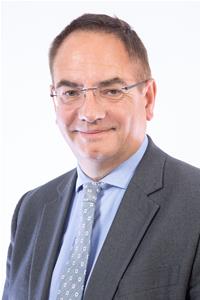
Adrian Lawrence FCA is the founder of FD Capital and a Fellow of the Institute of Chartered Accountants in England and Wales (ICAEW). He holds a BSc from Queen Mary College, University of London, and has over 25 years of experience as a Chartered Accountant and finance leader working with private, PE-backed and owner-managed businesses across the UK. He founded FD Capital to connect growing businesses with the Finance Directors and CFOs they need to scale — and personally interviews candidates for senior finance appointments.



 Accredited Member of GBC
 Accredited Member of LWF
 Carbon Offset via TreeNation